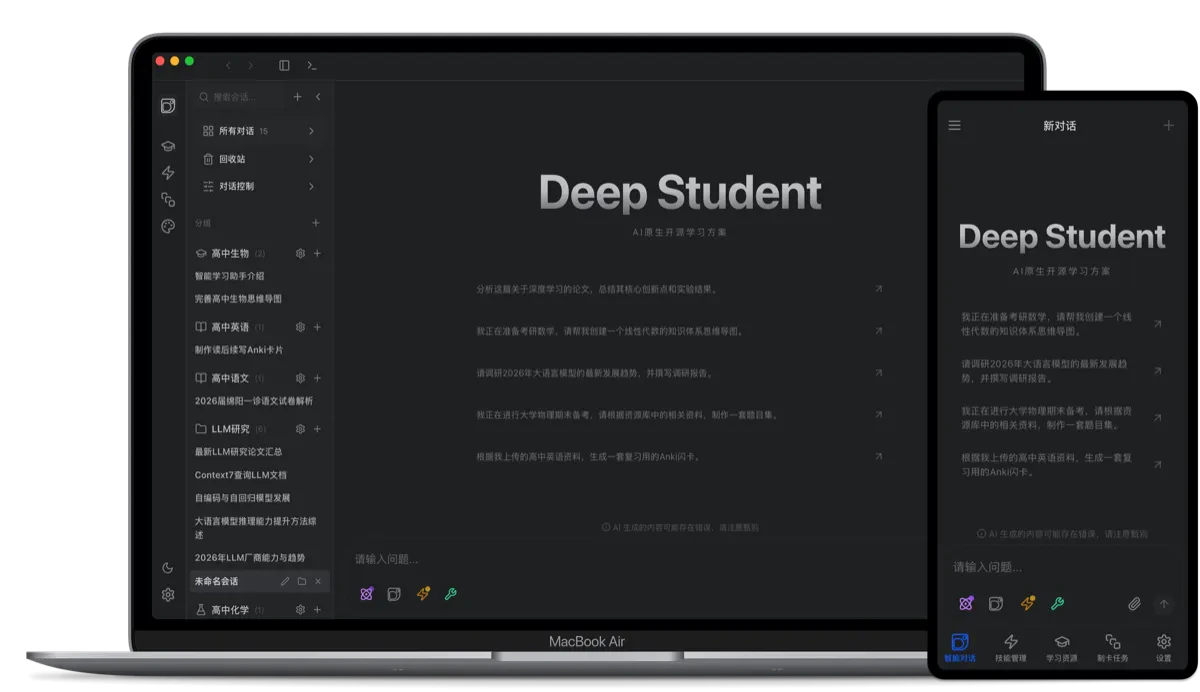
1. Install DeepStudent
- Official Website Download: https://deepstudent.cn/?view=download
- Official Documentation: https://deepstudent.cn/docs/
- Open-Source Releases: https://github.com/helixnow/deep-student/releases
2. Using SiliconFlow Models in DeepStudent
2.1 Obtain a SiliconFlow API Key
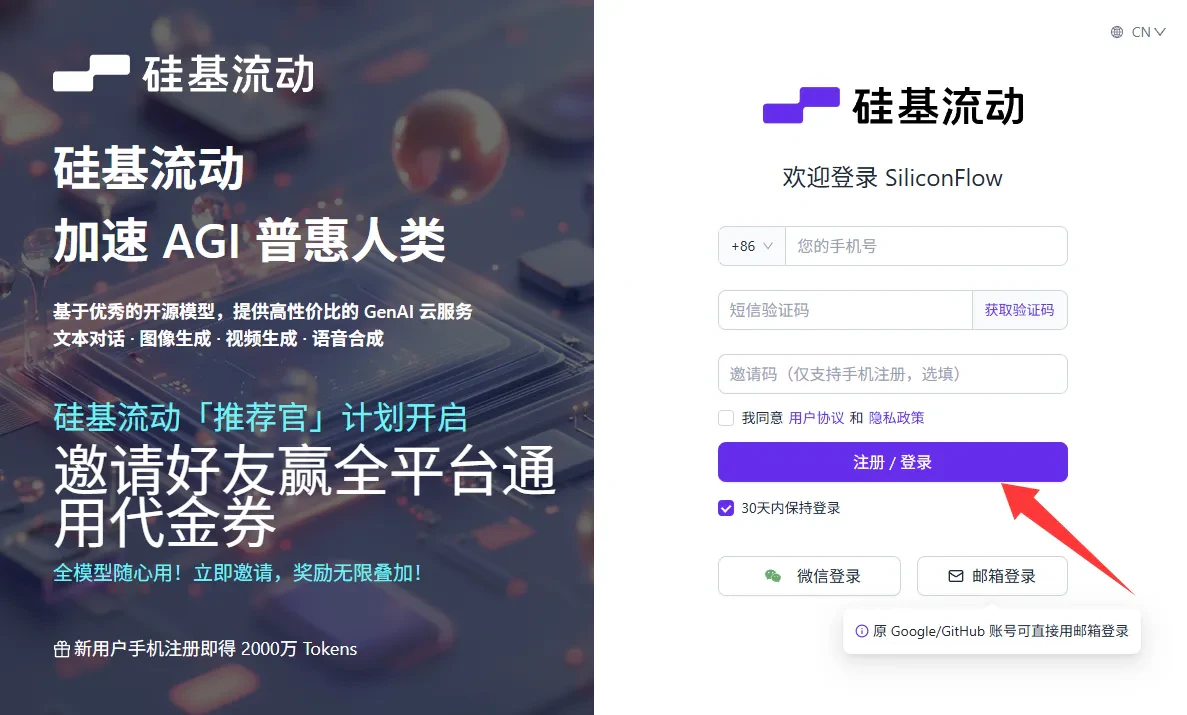
- Log in to SiliconFlow (registration is completed automatically on first login).
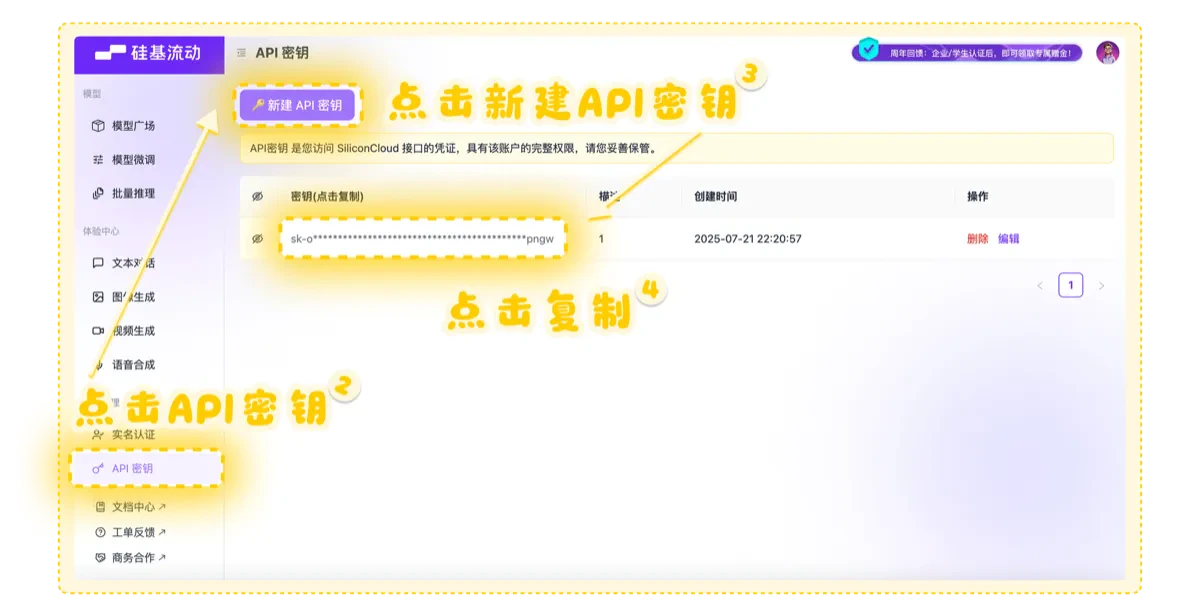
- Navigate to the “API Keys” page in the console.
- Click “Create New Key” and assign it a name (e.g., DeepStudent).
- Copy the generated key and store it securely.
2.2 Configure in DeepStudent
- Open DeepStudent and click the bottom-left corner to enter the Settings Center.
- Locate the dedicated SiliconFlow configuration section. As the preferred provider, SiliconFlow offers an independent quick configuration interface.
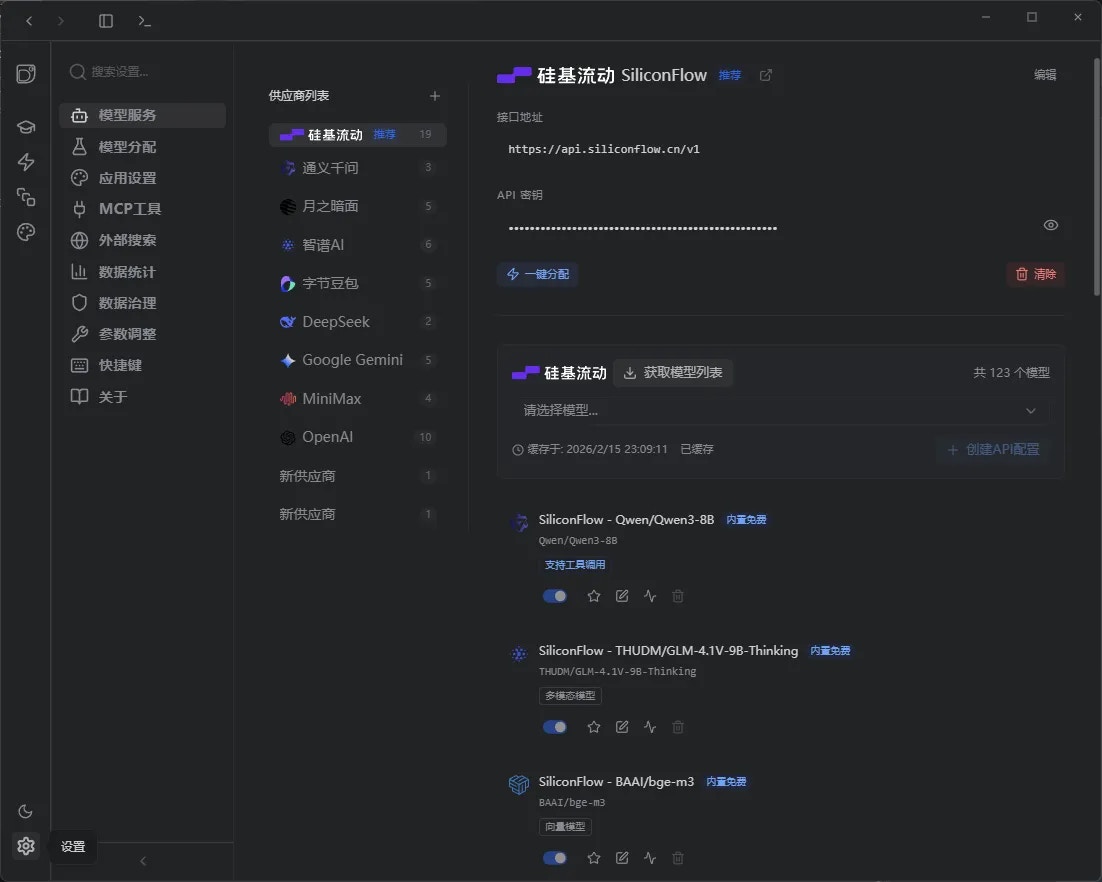
- Enter your SiliconFlow API Key.
-
Click the “One-Click Allocation” button. DeepStudent will automatically create and assign all required models:
- Main chat model (DeepSeek-V3.2)
- Anki card generation model (Qwen3-30B-A3B)
- Embedding model (bge-m3)
- Reranking model (bge-reranker-v2-m3)
- Translation model (Hunyuan-MT-7B)
- Lightweight task model (Ling-mini-2.0)
- Five OCR engines (PaddleOCR-VL-1.5 / PaddleOCR-VL / DeepSeek-OCR / GLM-4.6V / Qwen3-VL-8B)
3. Getting Started
3.1 AI Intelligent Dialogue & Deep Reasoning
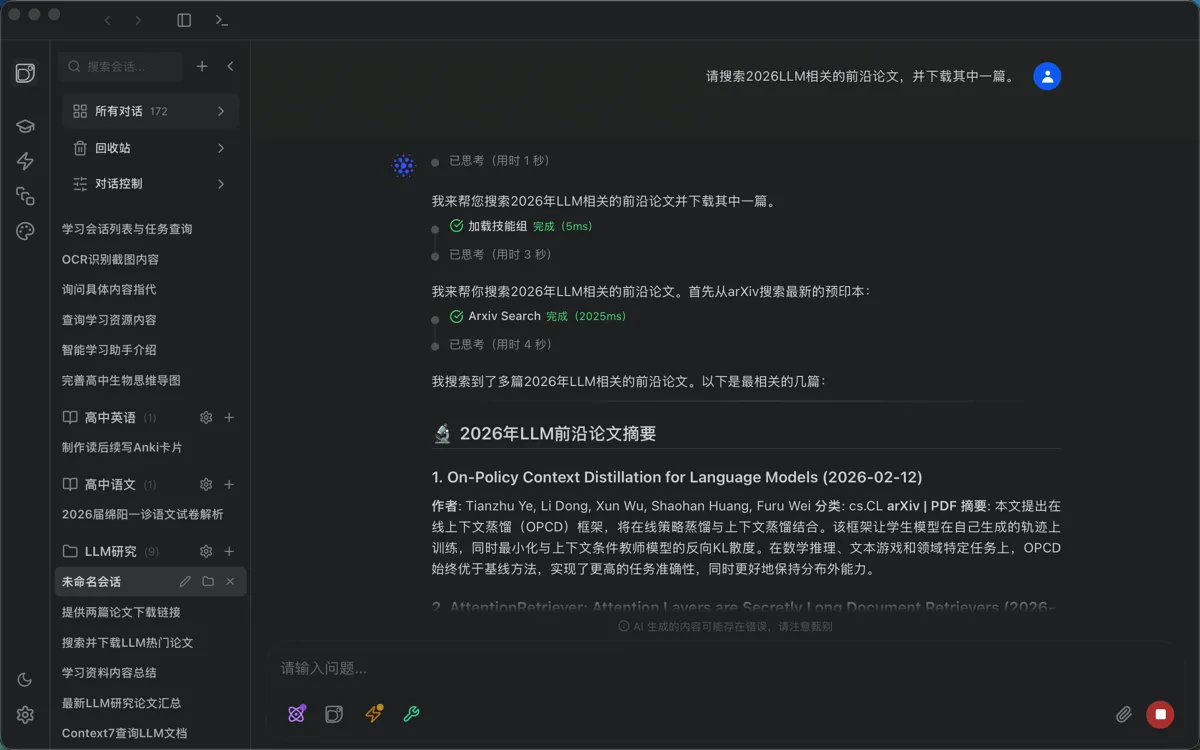
DeepStudent’s Chat V2 dialogue engine is purpose-built for learning scenarios. Paired with reasoning models such as DeepSeek-V3.2, it supports multimodal file drag-and-drop uploads with automatic OCR (images, PDFs, Word documents, etc.), deep reasoning (displaying the AI’s full chain of thought), multi-tab sessions, session branching, and context injection via the reference panel to attach knowledge base resources directly into conversations.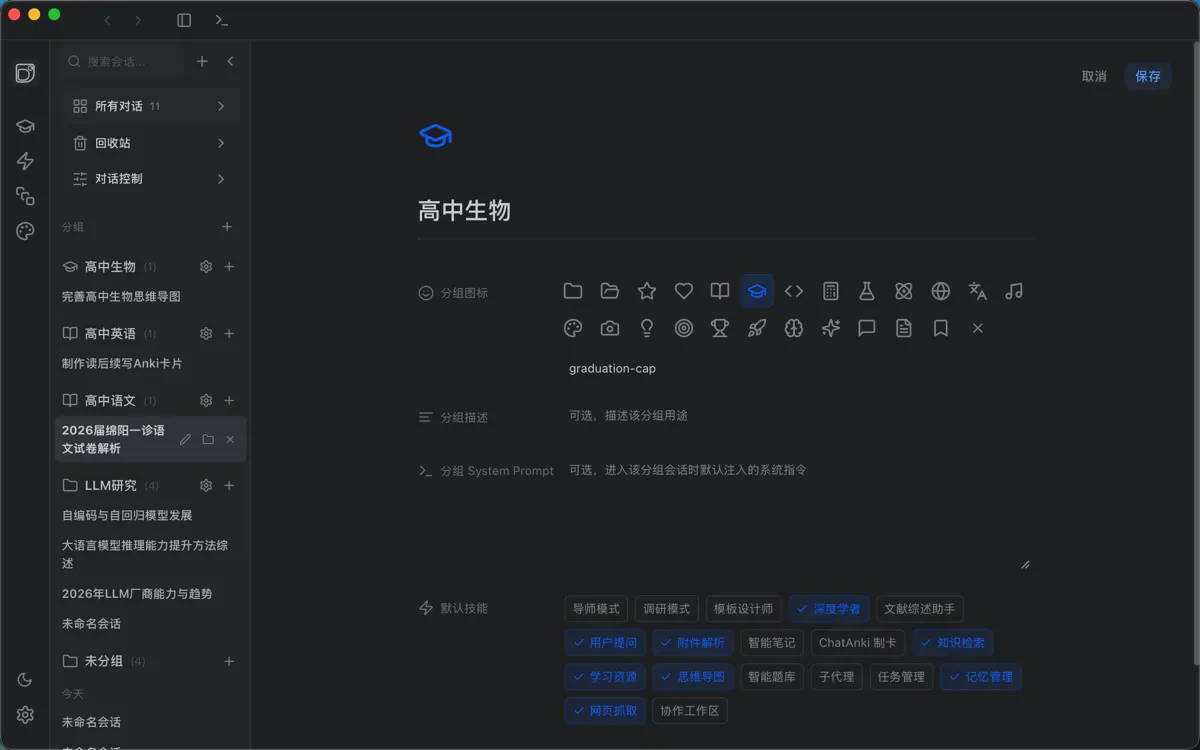
3.2 Skill System
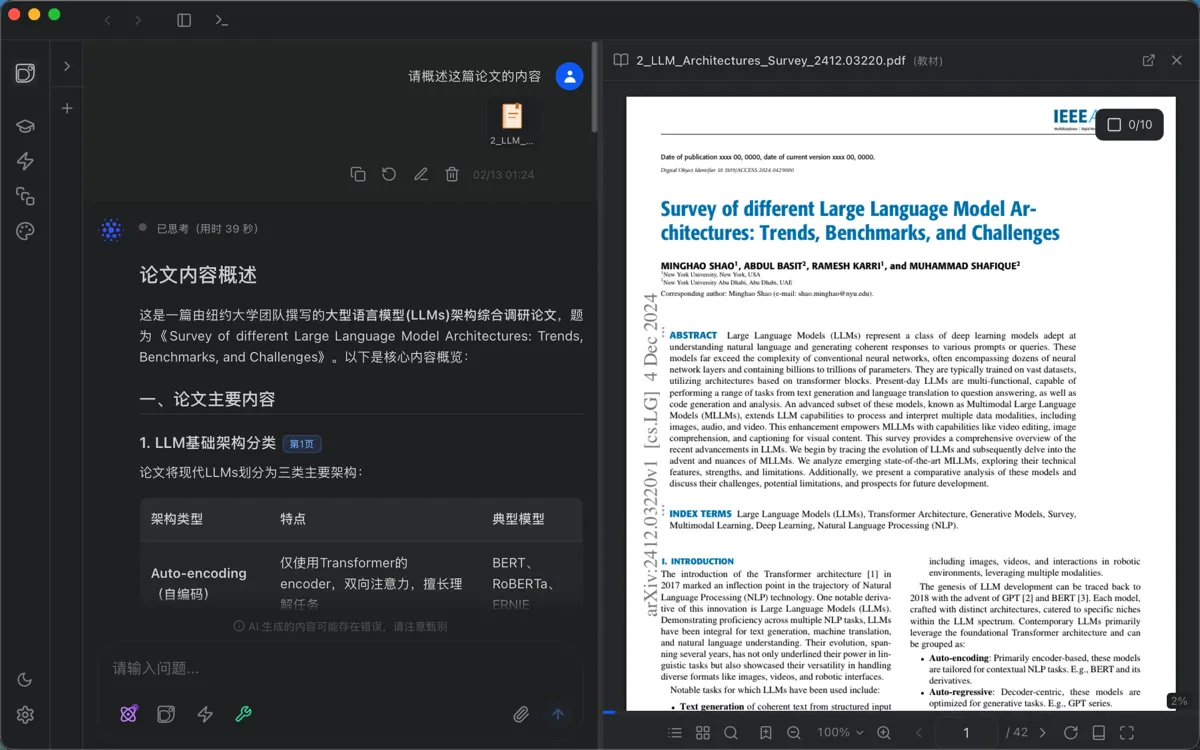
The core driving force of DeepStudent is its Skill System. Unlike traditional AI tools that cram all instructions into a bloated system prompt, DeepStudent decomposes AI capabilities into independent skill modules. Each skill encapsulates scenario-specific instructions and toolsets, which are progressively disclosed only when activated. This reduces token consumption while maintaining professional precision. Currently, 22 skills are built in (including 5 integrated skills and 17 tool-group skills), covering core learning scenarios such as card generation, research, academic writing, knowledge mapping, question banks, memory enhancement, translation, tutoring, literature review, Office suite operations, and sub-agents. Users can also extend capabilities via custom SKILL.md files. The default “Deep Scholar” strategy proactively recalls user profiles and prioritizes retrieval from the local knowledge base, ensuring every conversation benefits from personalized context. The skill system grants AI flexible read/write capabilities over learning data.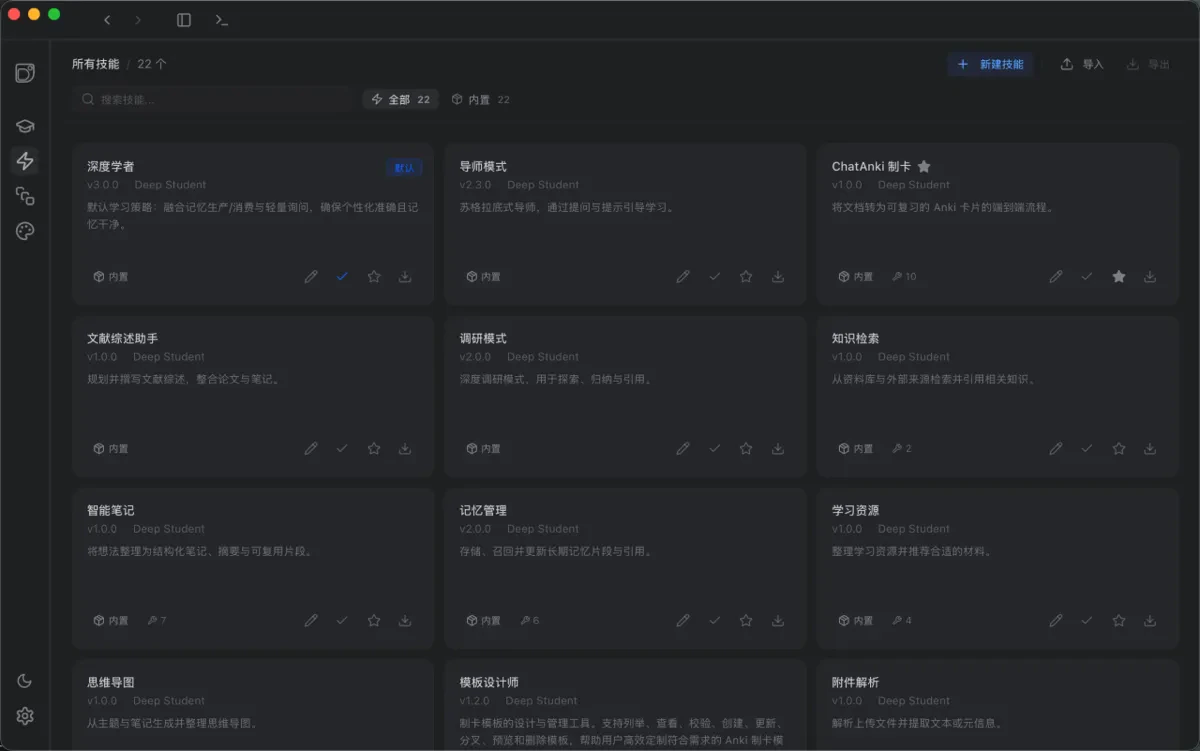
3.3 Learning Resource Center
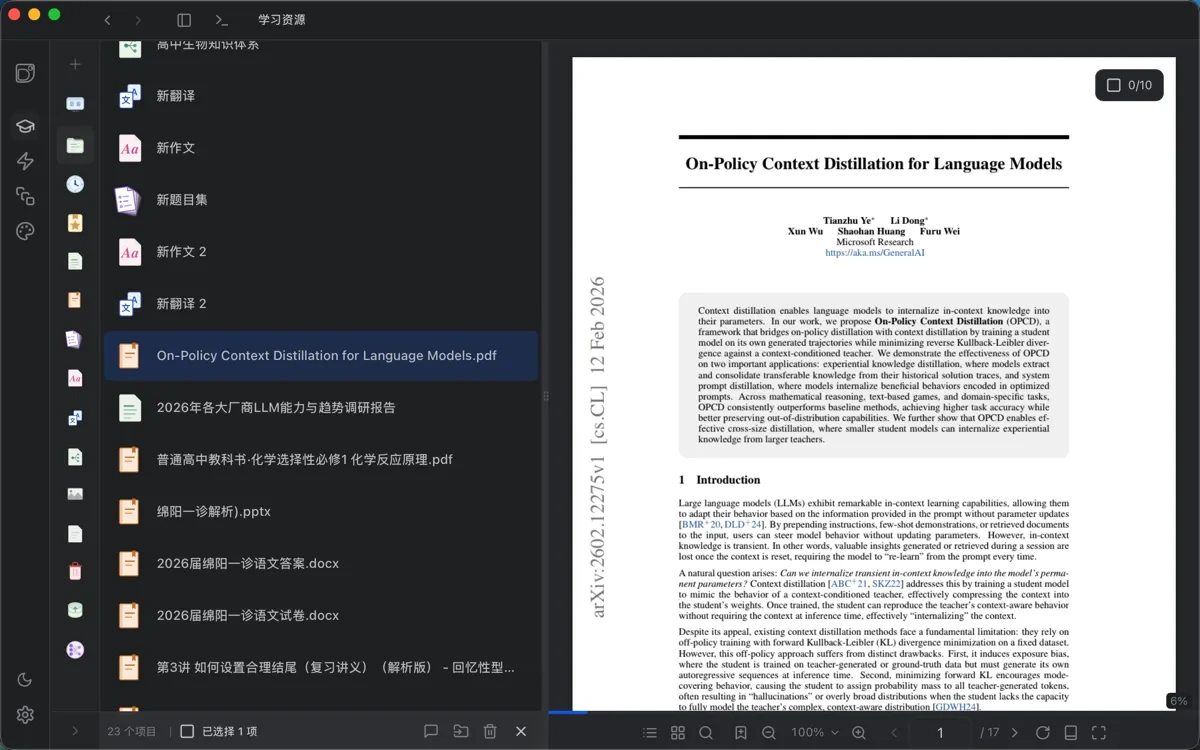
DeepStudent includes a macOS Finder-like Learning Hub that centrally manages all learning assets—notes, PDFs, question sets, translations, essays, knowledge maps, images, and more. Supported import formats include PDF, DOCX, XLSX, PPTX, EPUB, RTF, Markdown, CSV, HTML, JSON, and common image formats such as JPG/PNG/HEIC. After import, resources automatically enter the vectorization pipeline: text is recognized via OCR models (PaddleOCR-VL / DeepSeek-OCR, etc.), then converted into vector embeddings using the bge-m3 model and stored in LanceDB. The vector index supports multi-dimensional management—users can create different embedding spaces (text / multimodal) and bind them to different embedding models to meet diverse retrieval needs.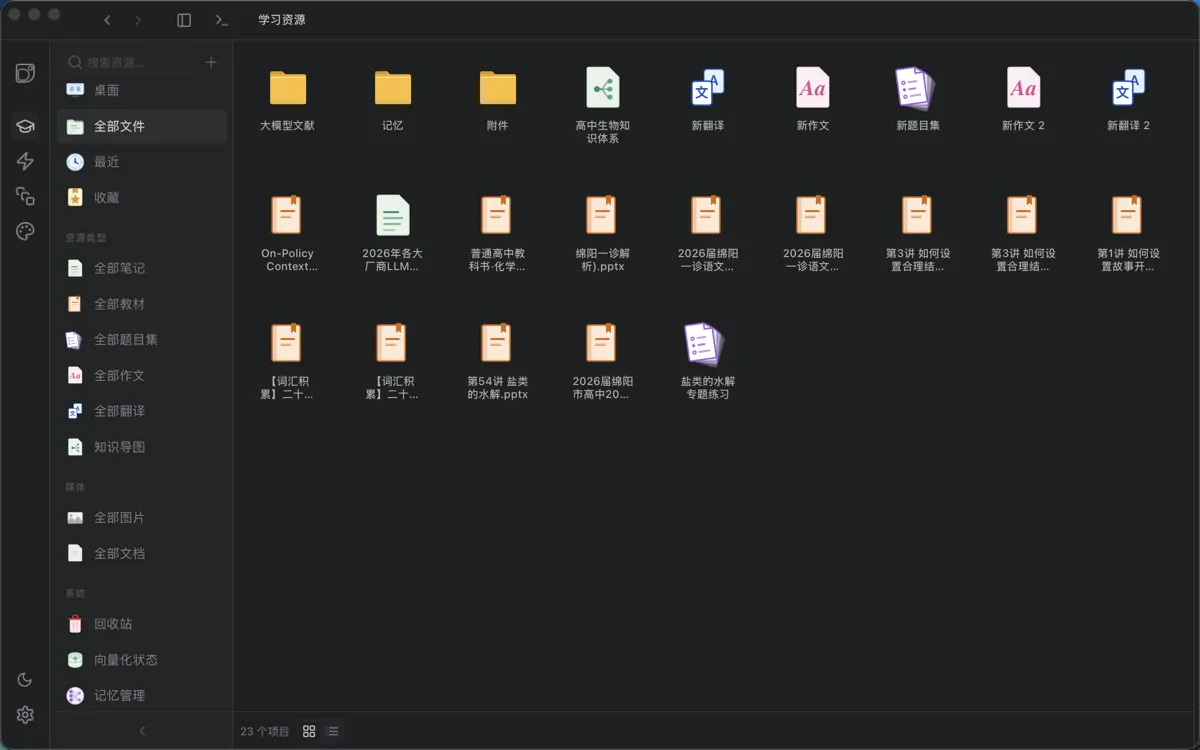
3.3 Deep Research
After activating the “Deep Research” skill, AI executes a complete multi-step agent workflow: Define objective → Online search (supports 7 search engines, configuration required) → Local knowledge base retrieval → Organization & analysis → Structured report generation. The final report is automatically saved as a note. Ideal for research projects, thesis proposals, and academic literature reviews.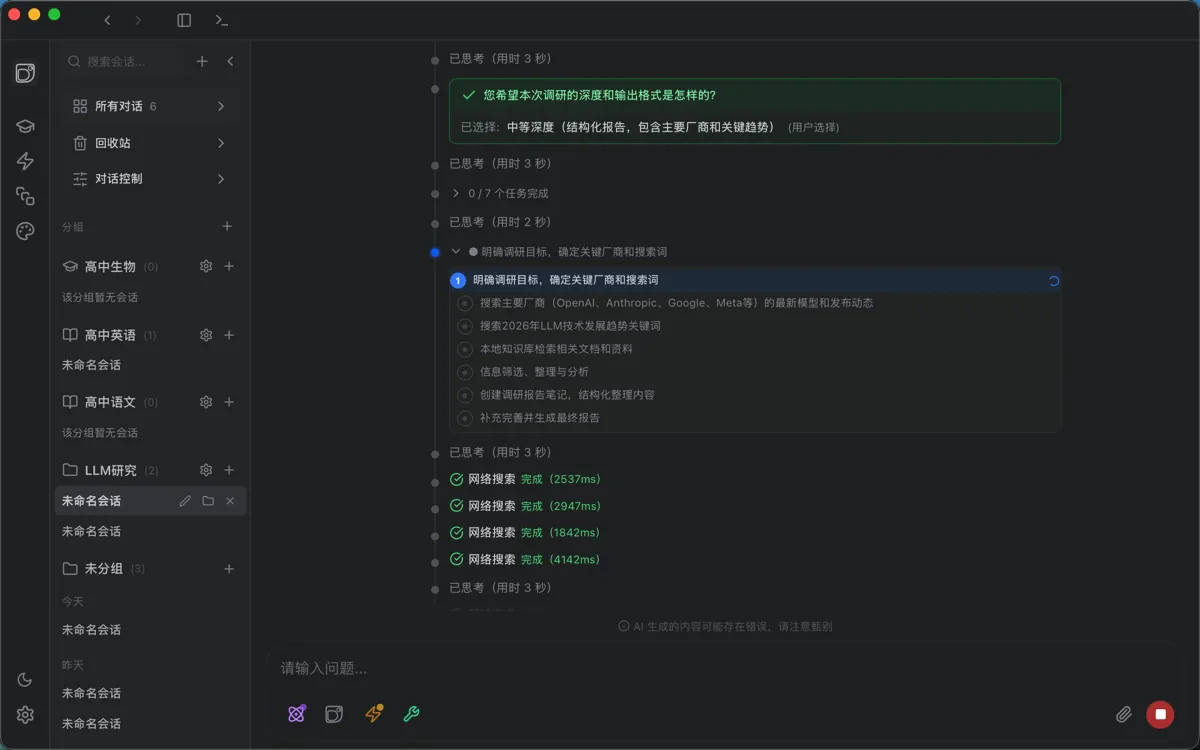
3.4 ChatAnki Intelligent Card Generation
Trigger the card-generation skill in natural language during conversation (e.g., “Turn this document into flashcards”). AI will batch-generate high-quality memory cards. A built-in template designer supports visual editing. Generated cards can be previewed with 3D flip animations, and once confirmed, synced to Anki with one click—bridging the final step from “understanding” to “memory.”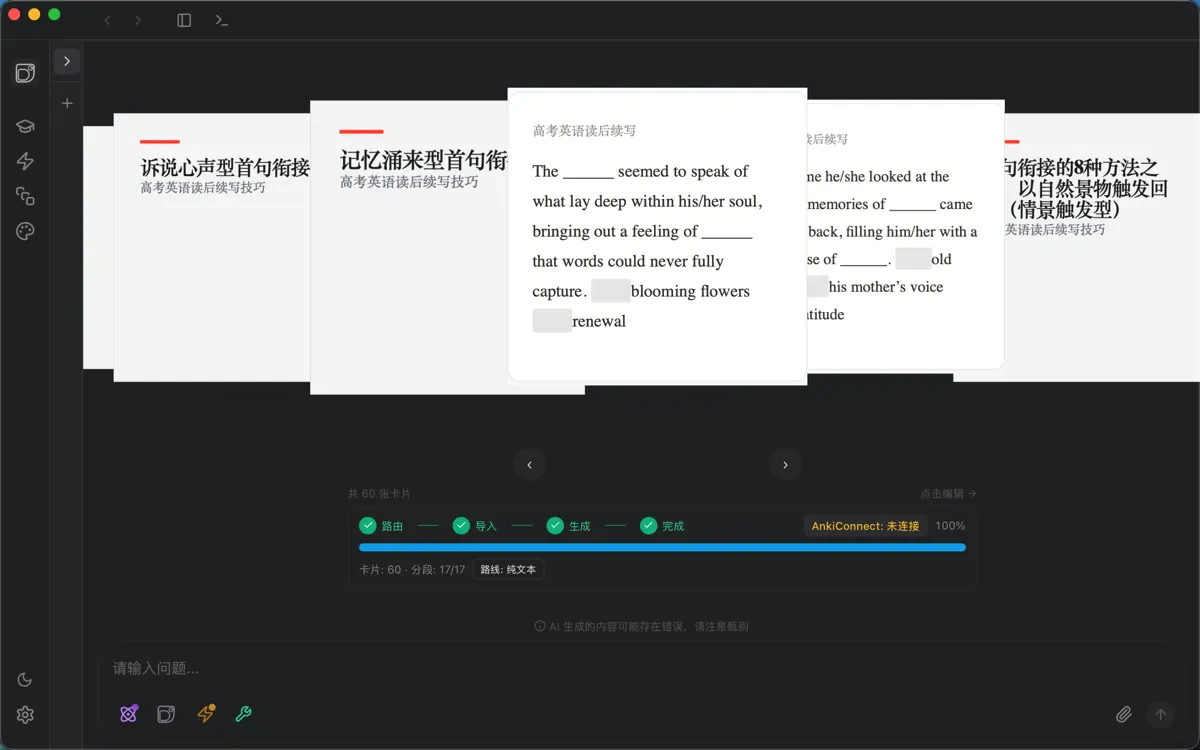
3.5 More Learning Scenarios
- Knowledge Mapping: Generate a complete subject knowledge system with a single sentence in chat. Supports multi-round AI editing, outline/mind-map view switching, and memorization mode.
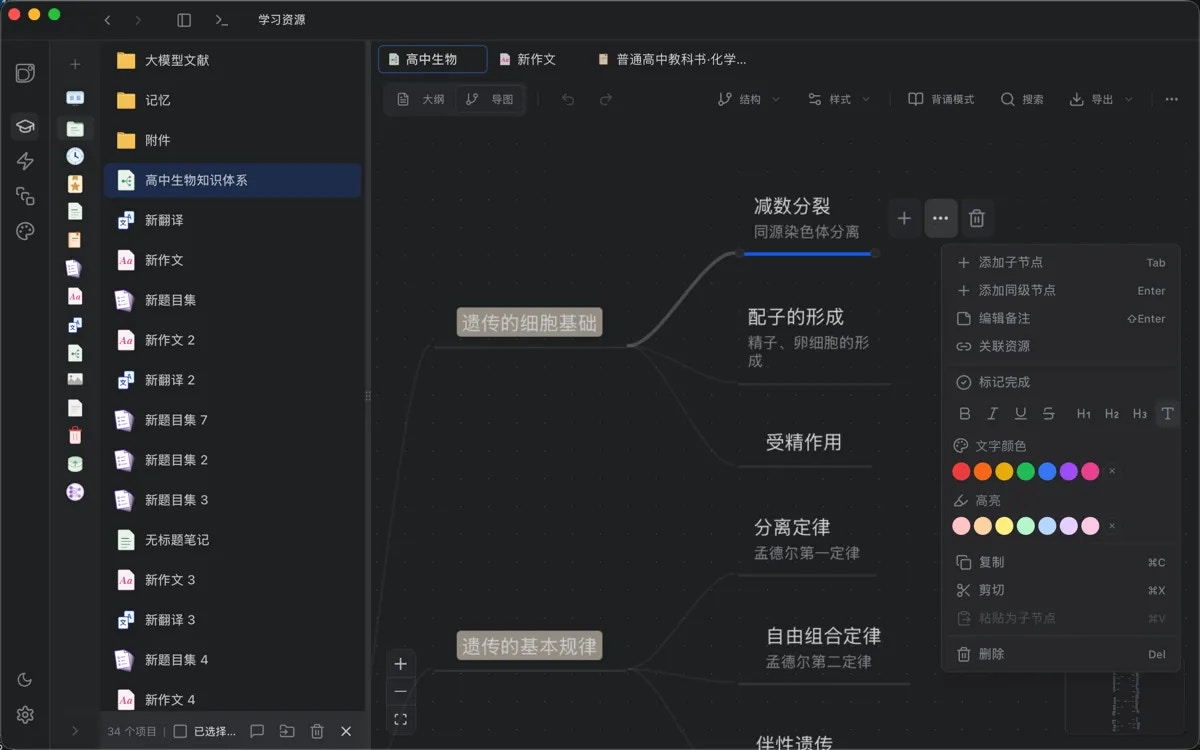
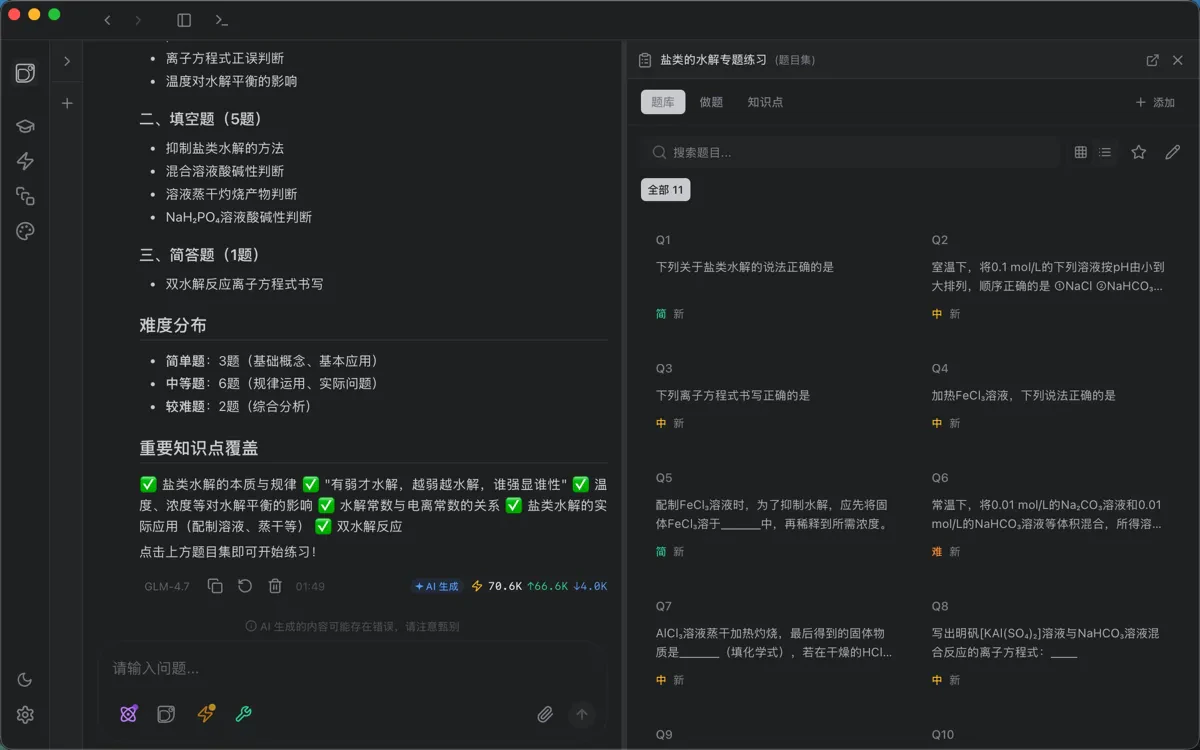
- Question Bank Practice: Upload textbooks or exam papers. AI automatically extracts question sets and supports daily practice, mock exams, and in-depth AI explanations.
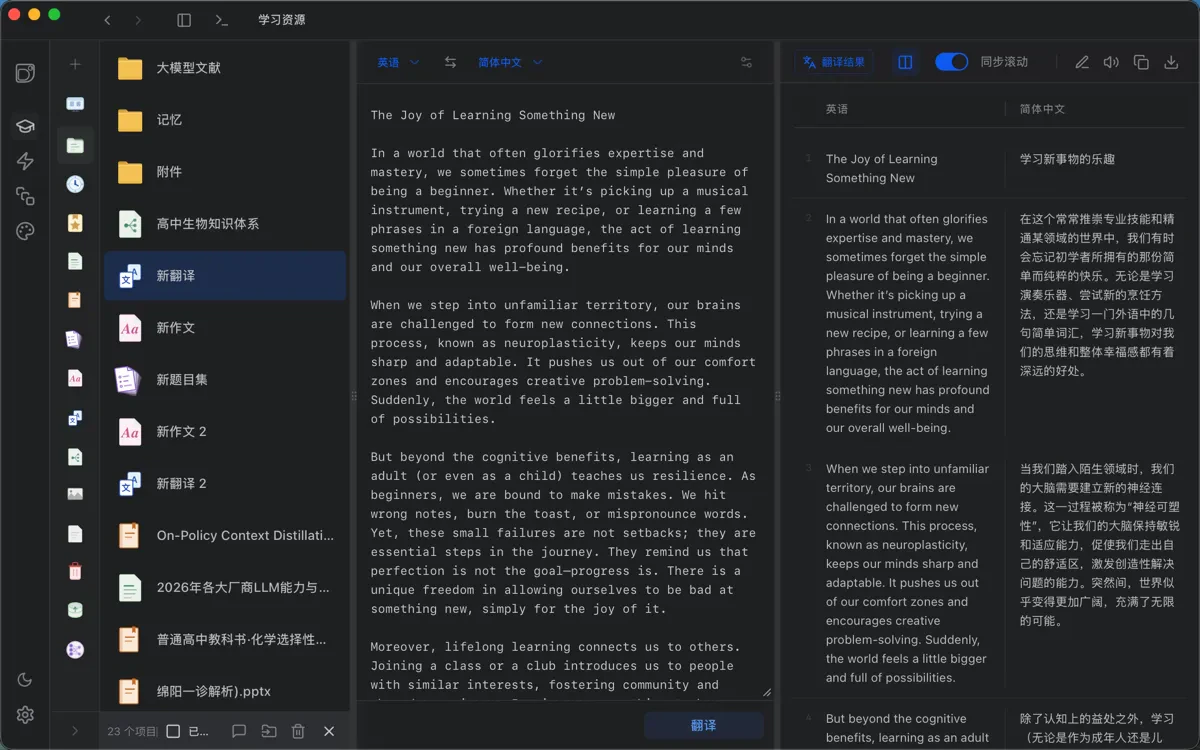
- Translation Workspace: Full-text translation with paragraph-by-paragraph bilingual alignment. Built-in presets for academic, technical, and literary domains.
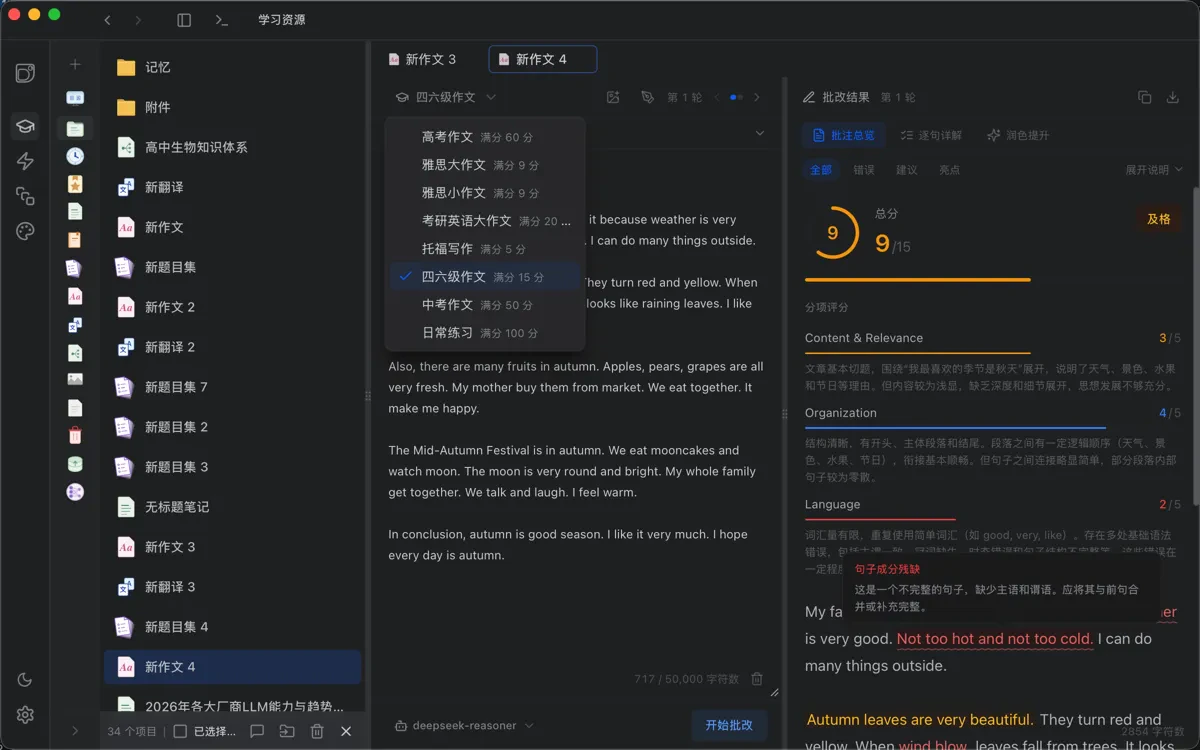
- Essay Grading: Covers Gaokao, IELTS, TOEFL, CET-4/6, and other standards. Provides multi-dimensional scoring and sentence-level refinement suggestions.
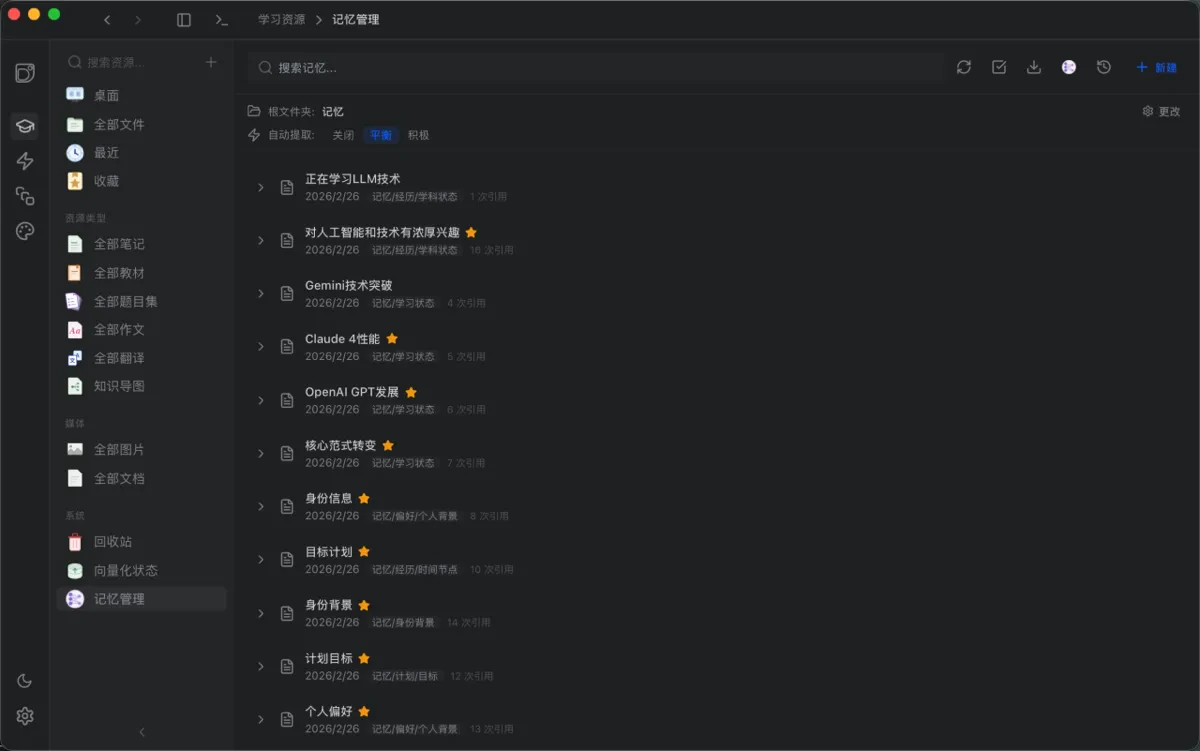
- Intelligent Memory: Inspired by mem0 and memU, this self-evolving user profiling system automatically extracts facts from conversations—becoming more personalized over time.
- MCP Extension: Compatible with Model Context Protocol, enabling connection to external tool services such as Context7.
- Academic Papers: Retrieve papers via arXiv and OpenAlex. Supports batch PDF downloads, multi-source fallback, and citation formatting in BibTeX / GB/T 7714 / APA styles.